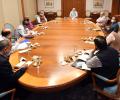
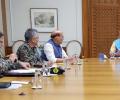
Stressing that while framing any policy, there is a need to look at it from India's strategic point of view, Modi said there were instances when notes from the national security council were not given due importance.
'What's currently underway is not a 'reset'.' 'What needs to be arrived at is a new balance.'
India has called Pakistan's nuclear bluff with Operation Sindoor and sent a psychological message to state-sponsored terrorists: nobody is untouchable and no place in Pakistan is safe for you, government sources said on Sunday.
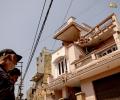
The casualties were reported hours before India and Pakistan agreed to end hostilities, which soared after the Indian Armed Forces hit terror launchpads in Pakistan and Pakistan-occupied Kashmir earlier this week in response to the Pahalgam attack.
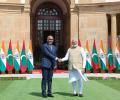
India on Monday asserted that its friendly ties with the Maldives will continue as Prime Minister Narendra Modi and President Mohamed Muizzu unveiled a blueprint for comprehensive economic and maritime cooperation, signalling a reset of the relationship that had hit a rough patch last year due to anti-New Delhi rhetoric.
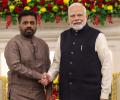
Sri Lankan President Anura Kumara Disanayaka assured Prime Minister Narendra Modi that his country's soil will not be used against India's interests, addressing concerns over China's growing influence in Colombo. The two leaders discussed a range of issues, including a defense cooperation agreement, energy ties, and debt restructuring. They also agreed to initiate a ferry service between Rameshwaram and Talaimannar, and to adopt a "humanitarian approach" to the fishermen issue.
'The strategic direction of the relationship will not be affected. But the perception has been affected.'
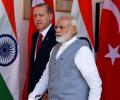
India-Turkiye ties are strained over Ankara's Islamabad tilt, its arms links with Pakistan, and fallout from the Pahalgam terror attack.

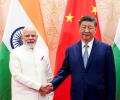
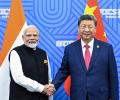
China on Thursday said the meeting between Prime Minister Narendra Modi and Chinese President Xi Jinping in Russia's Kazan on Wednesday carries a "great significance" as they reached an "important common understandings" to improve the bilateral ties.
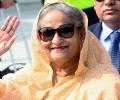
Bangladesh's interim government has requested India to extradite deposed Prime Minister Sheikh Hasina, who has been living in exile in India since August. The request comes after the Bangladesh-based International Crimes Tribunal issued arrest warrants for Hasina and several others for "crimes against humanity and genocide." The interim government has cited an existing extradition treaty between the two countries as grounds for the request. Hasina has accused the interim government of perpetrating "genocide" and failing to protect minorities since her ouster.

The Director Generals of Military Operations (DGMOs) of India and Pakistan on Monday deliberated on various aspects of the May 10 understanding reached between the two sides on cessation of hostilities.
'...and the country should be impoverished completely.' 'Once this is done, the political class would take over and then play a part in real democracy where the army is under the control of the government, not vice-versa.'
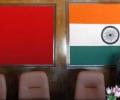
India and China have agreed to take measures to further ease the situation at the borders while continuing to implement the October agreement to resolve the standoff in eastern Ladakh comprehensively. The two sides held the 32nd meeting of the Working Mechanism for Consultation & Coordination on China-India Border Affairs (WMCC) in New Delhi, agreeing to maintain communication through diplomatic and military channels and safeguard sustainable peace and stability in the border areas. This meeting follows the October 21 agreement between the two countries to resolve the over four-year-long military standoff in eastern Ladakh.
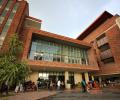
Ashoka Univeristy associate professor Ali Khan Mahmudabad has been arrested for his social media post on Operation Sindoor, police said in Sonipat on Sunday.
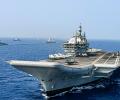
'It brings precarious peace because the red lines have shifted. 'The next Pahalgam attack would mean a full scale war.'

The Congress on Sunday demanded answers from the government on whether it has accepted third-party mediation on Kashmir after the United States made announcements on behalf of India and Pakistan, and slammed attempts to 'internationalise' the issue and 'hyphenate' the two countries.
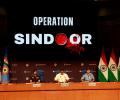
'We should not just react when a terror attack happens on our soil.' 'Our approach should be continuous and a launch pad should be destroyed the moment it comes up.'
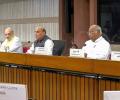
When the country has been at war, the Opposition has buried its differences with the government, points out Aditi Phadnis.
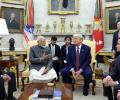
India and the United States have agreed to deepen their strategic partnership in several key areas, with President Donald Trump announcing plans to provide India with F-35 fighter jets and billions of dollars in military supplies. The two leaders also discussed energy cooperation, critical technologies, connectivity, and countering terrorism. They agreed to work together on the India-Middle East-Europe Economic Corridor, and Trump noted India's reforms to welcome US nuclear technologies. Prime Minister Modi said the two countries can shape a better world through their cooperation. Both leaders also addressed the Russia-Ukraine conflict, with Modi stressing India's commitment to peace.
The Galwan clash occurred six months after the Doklam disengagement and two high-profile meetings. India should not be caught by surprise once again, asserts former foreign secretary Shyam Saran.
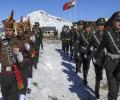
India on Monday announced it has reached an agreement with China on patrolling along the Line of Actual Control (LAC) in eastern Ladakh, in a major breakthrough in ending the over four-year-long military standoff ahead of a likely meeting between Prime Minister Narendra Modi and Chinese President Xi Jinping in Russia this week.
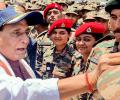
'You can be sure that the Pakistanis knew when the Indian Air Force aircraft took off, which type these were, and what their likely targets were.' 'The question was: How would they determine that the IAF wanted to fire, and when to bounce them?', notes Shekhar Gupta.
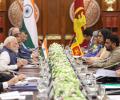
Prime Minister Narendra Modi received a tri-services ceremonial welcome in Colombo, Sri Lanka, marking the first time such an honor has been bestowed upon a foreign leader. The welcome took place at the historic Independence Square, the venue for national day celebrations. Modi's visit comes as Sri Lanka shows signs of recovery from a recent economic crisis, with India playing a significant role in providing assistance. During the visit, both leaders are expected to discuss a range of issues, including defense cooperation, energy, and digital initiatives.
'The Pakistanis called the US state department and said we agree with India on peace.' 'It was then that US President Donald Trump jumped in and took credit for the ceasefire.'

'If Washington has to balance Chinese power, she will have to turn to the third biggest power in the world which is India.' 'The United States and India will have to work together in order to keep Chinese ambitions in check.'

Ukrainian President Volodymyr Zelenskyy told the United Nations Security Council that 'we have to prepare' the second peace summit to end the Russia-Ukraine war 'altogether' and he has invited India and other countries to join the peace process.

Following the disengagement, both sides will soon start the coordinated patrolling in their respective areas, sources added.

As Finer wrapped up his high-profile visit to India, the White House said Finer 'acknowledged' India's establishment of a committee of enquiry to investigate the 'lethal plotting' and underlined the need for holding accountable those responsible.

Ukraine's First Deputy Foreign Minister Emine Dzhaparova will pay a four-day visit to India from Sunday, the first official visit from the East European country since the Russian invasion began last year.
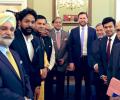
The reality is that far from being friendless, India is better positioned in the world than at any point post-Cold War, asserts Shekhar Gupta.

India and China on Wednesday held 'constructive' and 'forward-looking' diplomatic talks to resolve the over four-year border standoff along the Line of Actual Control (LAC) in eastern Ladakh but there was clear no indication of any breakthrough.

India will look at disengagement and de-escalation of the situation along the Line of Actual Control (LAC) in eastern Ladakh after restoration of the status quo of April 2020, Army Chief General Upendra Dwivedi said on Tuesday, a day after New Delhi announced striking an agreement with Beijing to end the over four-year border row in the region.
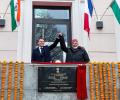
Prime Minister Narendra Modi and French President Emmanuel Macron have called for enhancing trade and investment ties between their countries and committed to further deepening their engagement in the Indo-Pacific. They discussed a full spectrum of bilateral relations, including key global and regional issues, and stressed the urgent need for reform in the United Nations Security Council. The leaders also underscored their commitment to ensuring the global AI sector can drive positive social, economic, and environmental outcomes.
A peace keeping role for India is a distinct possibility. Indian military has both the numbers and experience to carry out this job, observes Colonel Anil A Athale (Retd).

Bangladesh's ousted Prime Minister Sheikh Hasina has launched a scathing attack on the interim administration, accusing Chief Adviser Muhammad Yunus of running a "fascist regime" that persecutes minorities and allows terrorists to operate freely. Hasina, who is currently in India, made the remarks in a virtual address to overseas Awami League supporters, vowing to bring Yunus and his allies to justice for alleged atrocities. Her comments come ahead of a visit by India's Foreign Secretary to Dhaka, where he is expected to raise concerns about the safety of minorities in Bangladesh.

The granting of visas to envoys on both sides is expected to lower diplomatic tensions, which has so far seen staff strengths at the high commissions being reduced by over 60 per cent.
T C A Raghavan will be the Indian deputy high commissioner in Pakistan, while Munawar Saeed Bhatti will be his counterpart in India.
Besides, Charge d'Affaires Sudhir Vyas, among those asked to leave is First Secretary Rahul Rasgotra.

Rawat, an Indian Foreign Service (IFS) officer of the 1990 batch and regarded as a China expert, will succeed Vikram Misri.

India and China have made "some progress" in disengagement, External Affairs Minister S Jaishankar said on Sunday, describing it as a "welcome" move which opens up the possibility that other steps could happen.
